Gallbladder Surgery in Bhopal may be recommended when gallstones or other gallbladder conditions cause repeated pain, inflammation, infection or complications. The gallbladder is a small organ located beneath the liver that stores and concentrates bile. Although a person can live without a gallbladder, problems affecting this organ can sometimes require medical or surgical treatment.
Gallstones are one of the most common gallbladder problems. Some people have gallstones without symptoms and may not require surgery, while others develop repeated episodes of abdominal pain, nausea, inflammation or infection. Treatment depends on symptoms, imaging findings, the condition of the gallbladder and the patient’s overall health.Dr. Zuber Khan is a Consultant Gastro and Advanced Laparoscopic Surgeon at Bansal Hospital, Bhopal. According to the information provided, he has more than 8 years of experience in minimally invasive surgery, gastrointestinal surgery, bariatric surgery, piles treatment and colorectal procedures. His qualifications include MBBS, MS and FNB-MAS. This article explains gallbladder diseases, when surgery may be considered, how laparoscopic gallbladder surgery is performed, recovery, possible risks and common questions patients may have.
What Is the Gallbladder?
The gallbladder is a small, pear-shaped organ located underneath the liver. Its main function is to store bile produced by the liver. Bile helps the body digest fats.When a person eats, the gallbladder can release bile into the small intestine through the bile ducts. Problems can occur when gallstones block the normal flow of bile or when the gallbladder becomes inflamed. A person with gallbladder disease may experience symptoms ranging from mild discomfort to severe abdominal pain and infection.
Patients searching for Gallbladder Surgery in Bhopal should first understand that not every gallstone or gallbladder abnormality requires an operation. The decision depends on symptoms and clinical findings.
What Are Gallstones?
Gallstones are hardened deposits that develop inside the gallbladder. They can vary in size, from very small particles to larger stones.Gallstones can develop when substances present in bile become imbalanced or when the gallbladder does not empty normally. Some people have gallstones without experiencing any symptoms. These are sometimes called silent gallstones.
When a stone blocks the cystic duct or another bile duct, symptoms can develop.
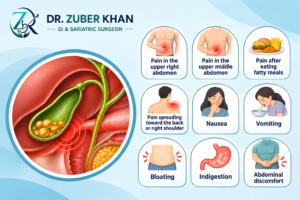
Common symptoms include:
- Pain in the upper right abdomen
- Pain in the upper middle abdomen
- Pain after eating fatty meals
- Pain spreading toward the back or right shoulder
- Nausea
- Vomiting
- Bloating
- Indigestion
- Abdominal discomfort
Repeated or severe symptoms should be evaluated by a healthcare professional.
What Causes Gallbladder Problems?
Gallstones are a major cause of gallbladder-related symptoms, but several other conditions can affect the gallbladder.
These include:
- Gallstones
- Acute cholecystitis
- Chronic cholecystitis
- Gallbladder polyps
- Bile duct stones
- Gallstone-related pancreatitis
- Gallbladder infection
- Certain structural abnormalities
The cause needs to be identified before treatment is selected.People looking for Gallstone Treatment in Arera Colony, Bhopal may have different conditions despite having similar symptoms. A proper examination and ultrasound can help identify the underlying problem.
Symptoms of Gallbladder Disease
Gallbladder symptoms can vary considerably. Some patients experience occasional discomfort, while others develop sudden and intense pain.
Common symptoms
The most common symptoms include:
- Sudden upper abdominal pain
- Pain after meals
- Nausea
- Vomiting
- Indigestion
- Bloating
- Feeling unusually full
- Pain under the right ribs
- Pain extending toward the right shoulder or back
Symptoms requiring prompt medical attention
Certain symptoms may indicate a complication and require urgent assessment:
- Severe or persistent abdominal pain
- Fever
- Chills
- Yellowing of the skin or eyes
- Dark urine
- Pale stools
- Persistent vomiting
- Significant abdominal tenderness
These symptoms can occur with complications such as acute gallbladder inflammation or bile duct obstruction.
Patients considering Gallstones Specialist in Kolar Road, Bhopal services should not delay evaluation when severe or persistent symptoms develop.
When Is Gallbladder Surgery Required?
Not everyone with gallstones needs surgery. If gallstones are discovered incidentally and do not cause symptoms or complications, a doctor may recommend observation rather than immediate surgery. Surgery may be considered when gallstones cause:
- Repeated biliary colic
- Acute cholecystitis
- Chronic gallbladder inflammation
- Gallstone pancreatitis
- Complications involving the bile ducts
- Recurrent symptoms affecting daily life
- Certain gallbladder abnormalities
The exact recommendation depends on the patient’s diagnosis.
A Gallbladder Surgeon in Shahpura, Bhopal may review symptoms, ultrasound findings, blood tests and other investigations before determining whether surgery is appropriate.
What Is Cholecystectomy?
Cholecystectomy is the medical term for surgical removal of the gallbladder. It is one of the most commonly performed operations for symptomatic gallstone disease and gallbladder inflammation.
There are two broad approaches:
- Laparoscopic cholecystectomy
- Open cholecystectomy
Laparoscopic surgery is commonly used when it is clinically suitable. Open surgery may be necessary in certain complicated cases or when laparoscopic surgery cannot be safely completed. Cholecystectomy Surgery near Trilanga, Bhopal may therefore involve different surgical approaches depending on the patient’s anatomy, inflammation and operative findings.
What Is Laparoscopic Gallbladder Surgery?
Laparoscopic gallbladder surgery is a minimally invasive procedure in which the surgeon removes the gallbladder through several small abdominal incisions. A camera called a laparoscope allows the surgeon to view the abdominal cavity on a monitor. Special surgical instruments are then used to separate and remove the gallbladder.
Compared with a traditional open operation, laparoscopic surgery generally involves smaller incisions. However, minimally invasive surgery does not mean that complications are impossible. Surgical risks still need to be discussed before the procedure. Patients searching for Laparoscopic Gallbladder Surgery in Gulmohar Colony, Bhopal should ask the surgeon which approach is suitable for their particular condition.
How Is Laparoscopic Gallbladder Surgery Performed?
The procedure is performed under general anaesthesia.
Step 1: Anaesthesia
The patient receives general anaesthesia so that they remain asleep and comfortable during the operation.
Step 2: Small Incisions
The surgeon makes several small openings in the abdominal wall.
Step 3: Camera Placement
A laparoscope is introduced through one of the openings. The camera provides an enlarged view of the gallbladder and surrounding structures.
Step 4: Surgical Dissection
The surgeon carefully identifies the gallbladder, cystic duct and cystic artery.
Step 5: Removal
The cystic duct and blood supply are secured, and the gallbladder is separated from the liver and removed.
Step 6: Final Inspection
The surgical area is inspected for bleeding or other concerns before the instruments are removed.
Step 7: Closing the Incisions
The small abdominal incisions are closed using appropriate sutures or other closure methods.
The exact surgical steps may vary depending on anatomy, inflammation, previous abdominal surgery and other clinical factors.
Advantages of Laparoscopic Surgery
When laparoscopic surgery is appropriate, it can offer several benefits associated with minimally invasive access.
These may include:
- Smaller incisions
- Less tissue disruption
- Reduced postoperative discomfort for many patients
- Earlier mobility
- Shorter hospital stay in many uncomplicated cases
- Smaller scars
- Earlier return to routine activities compared with open surgery in many cases
These benefits do not mean that laparoscopic surgery is appropriate for every patient. A Gallbladder Surgeon in Shahpura, Bhopal should assess whether the procedure can be performed safely using a minimally invasive approach.
Gallstone Diagnosis
Before deciding on treatment, doctors generally evaluate the symptoms and perform appropriate investigations.
Ultrasound
Abdominal ultrasound is commonly used to identify gallstones, gallbladder wall thickening, fluid around the gallbladder and other abnormalities.
Blood Tests
Blood tests may include liver-function tests and markers of infection or inflammation.
Additional Imaging
Depending on the findings, doctors may recommend additional imaging such as MRCP, CT or other specialised tests.
Endoscopic Procedures
When a stone is suspected in the common bile duct, an endoscopic procedure such as ERCP may sometimes be required for diagnosis or treatment. Patients seeking Gallstone Treatment in Arera Colony, Bhopal should understand that the treatment decision is generally based on a combination of symptoms, imaging and laboratory findings.
Gallstones and Bile Duct Stones
A gallstone inside the gallbladder is not necessarily the same problem as a stone that has moved into the common bile duct.
A common bile duct stone can cause:
- Jaundice
- Abnormal liver tests
- Bile duct infection
- Pancreatitis
When a bile duct stone is present, treatment may involve ERCP or another appropriate intervention before or around the time of gallbladder surgery. This distinction is important for patients researching Gallstones Specialist in Kolar Road, Bhopal, because treatment may involve more than simply removing the gallbladder.
Acute Cholecystitis
Acute cholecystitis means sudden inflammation of the gallbladder. Gallstones are a common cause.
Symptoms may include:
- Persistent pain in the upper right abdomen
- Fever
- Nausea
- Vomiting
- Abdominal tenderness
A patient with suspected acute cholecystitis may require hospital assessment, blood tests, imaging, medication and sometimes surgery. In suitable patients, early laparoscopic removal of the gallbladder may be recommended. Gallbladder Disease Treatment in Misrod, Bhopal should therefore be based on the specific gallbladder condition rather than treating all abdominal pain as gallstone disease.
Chronic Gallbladder Problems
Some patients experience repeated episodes of gallbladder pain over an extended period. Chronic inflammation can develop in association with recurrent gallstone-related symptoms. The symptoms may be less dramatic than an acute attack but can interfere with meals and everyday activities. When symptoms are recurrent and investigations demonstrate a gallbladder-related cause, surgery may be discussed. Patients considering Gallbladder Removal Surgery near Bawadiya Kalan, Bhopal should discuss whether their symptoms are actually related to gallstones before proceeding with an operation.
What Is Gallbladder Removal Surgery?
Gallbladder removal surgery involves removing the gallbladder rather than simply removing the stones from inside it. This is because gallstones can form again if the gallbladder remains in place.
After the gallbladder is removed, bile continues to be produced by the liver. Instead of being stored in the gallbladder, bile flows directly into the intestine. Most people can live normally without a gallbladder. However, some patients may temporarily experience changes in bowel habits after surgery, particularly when eating fatty foods.
Who Performs Gallbladder Surgery?
Gallbladder operations are generally performed by a general surgeon, gastrointestinal surgeon or surgeon with appropriate training in laparoscopic procedures. Dr. Zuber Khan is described in the supplied information as a Consultant Gastro and Advanced Laparoscopic Surgeon at Bansal Hospital, Bhopal. His stated areas of surgical experience include minimally invasive surgery, gastrointestinal procedures, bariatric surgery, colorectal procedures and gallbladder-related operations. A Gallbladder Specialist near Saket Nagar, Bhopal can evaluate whether a patient’s symptoms are consistent with gallbladder disease and determine whether surgical consultation is appropriate.
About Dr. Zuber Khan
Dr. Zuber Khan is a Consultant Gastro and Advanced Laparoscopic Surgeon at Bansal Hospital, Bhopal.
His listed qualifications include:
- MBBS
- MS
- FNB-MAS
According to the supplied profile, he has more than eight years of experience in minimally invasive surgery, piles treatment, gastrointestinal surgery, bariatric surgery and colorectal procedures. His clinical work includes laparoscopic and gastrointestinal surgical care. Patients are provided explanations regarding their condition, treatment options and recovery expectations as part of the consultation process. For patients searching for a Gallbladder Surgeon in Shahpura, Bhopal, an assessment by a surgeon with relevant laparoscopic experience can help determine whether surgical treatment is required.
Preparing for Gallbladder Surgery
Preparation depends on the patient’s medical condition and the type of operation planned.
Before surgery, the medical team may review:
- Medical history
- Previous operations
- Current medicines
- Allergies
- Blood tests
- Liver-function tests
- Imaging reports
- Anaesthesia requirements
Patients may be instructed not to eat or drink for a specified period before surgery. People taking blood-thinning medicines should inform their doctor because these medicines may need specific perioperative management. A Gallbladder Specialist near Saket Nagar, Bhopal can explain the preparation process based on the planned procedure and the patient’s medical history.
Recovery After Laparoscopic Gallbladder Surgery
Recovery varies from one patient to another. After uncomplicated laparoscopic surgery, many patients can begin walking relatively soon. Hospital stay may be short, although patients with acute inflammation or other medical issues may need longer observation.
During the first few days, patients may experience:
- Mild abdominal discomfort
- Temporary bloating
- Tiredness
- Shoulder-tip discomfort related to the gas used during laparoscopy
- Changes in bowel habits
The surgical team provides instructions about wound care, physical activity, diet and follow-up. A Gallbladder Removal Surgery near Bawadiya Kalan, Bhopal patient should follow the individual discharge instructions rather than comparing recovery with another person’s experience.
Diet After Gallbladder Surgery
There is no single diet that every patient must follow permanently after gallbladder removal. During the early recovery period, some people find that smaller meals and lower-fat foods are easier to tolerate.
Foods that may cause temporary digestive discomfort in some patients include:
- Very fatty meals
- Deep-fried foods
- Large meals
- Excessively spicy foods
A gradual return to a normal balanced diet is possible for many people. Patients with other digestive conditions may require additional dietary advice.
Possible Risks of Gallbladder Surgery
Gallbladder surgery is commonly performed, but every operation carries potential risks.
Possible complications include:
- Bleeding
- Infection
- Anaesthesia-related complications
- Injury to nearby organs
- Bile leakage
- Bile duct injury
- Blood clots
- Wound problems
- Need to convert from laparoscopic to open surgery
The risk varies according to the patient’s health, anatomy, inflammation and surgical complexity. During consultation, a surgeon should explain the expected benefits, alternatives and possible complications. Laparoscopic Gallbladder Surgery in Gulmohar Colony, Bhopal should therefore be considered after an individual surgical assessment rather than solely on the basis of the minimally invasive approach.
When Can Laparoscopic Surgery Be Converted to Open Surgery?
Sometimes the surgeon may decide that continuing laparoscopically is not sufficiently safe.
This can happen because of:
- Severe inflammation
- Dense scar tissue
- Unclear anatomy
- Significant bleeding
- Previous abdominal operations
- Unexpected findings
Conversion to open surgery is a safety decision and does not necessarily indicate that something went wrong. A patient considering Cholecystectomy Surgery near Trilanga, Bhopal should understand that the final surgical approach can sometimes change during the operation.
Gallbladder Surgery at Bansal Hospital
According to the supplied hospital information, Bansal Hospital provides modern medical infrastructure, operation theatres, diagnostic support, emergency services and recovery facilities. Dr. Zuber Khan works as a Consultant Gastro and Advanced Laparoscopic Surgeon at the hospital.
The hospital setting allows surgical patients to undergo preoperative evaluation, operative care and postoperative monitoring under the appropriate medical teams. Patients considering Gallbladder Surgery in Bhopal should discuss the available facilities, surgical approach, expected recovery and follow-up arrangements during consultation.
Why Laparoscopic Experience Matters
Laparoscopic surgery requires familiarity with small-incision surgical techniques, camera-based visualisation and specialised instruments. Gallbladder surgery also requires careful identification of the cystic duct and cystic artery because these structures are close to the main bile ducts and blood vessels. A surgeon’s assessment should therefore consider both the advantages of minimally invasive surgery and the complexity of the individual case. Patients searching for Laparoscopic Gallbladder Surgery in Gulmohar Colony, Bhopal should ask whether laparoscopic surgery is suitable for their particular gallbladder condition.
Gallbladder Disease and Emergency Symptoms
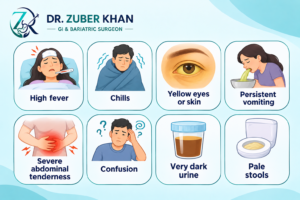
Some gallbladder problems can become emergencies.
Patients should seek urgent medical attention when abdominal pain is accompanied by:
- High fever
- Chills
- Yellow eyes or skin
- Persistent vomiting
- Severe abdominal tenderness
- Confusion
- Very dark urine
- Pale stools
These symptoms may indicate infection, bile duct obstruction or another complication. A Gallbladder Specialist near Saket Nagar, Bhopal can evaluate gallbladder symptoms, but emergency symptoms should be assessed without unnecessary delay.
Gallbladder Surgery for Different Age Groups
Gallbladder disease can occur in younger adults, middle-aged individuals and older adults. Age alone does not determine whether surgery is appropriate. Doctors also consider:
- Heart and lung health
- Diabetes
- Kidney function
- Medicines
- Previous surgeries
- Overall fitness
- Severity of gallbladder disease
Older patients with significant medical conditions may require additional preoperative assessment. Similarly, younger patients with repeated symptomatic gallstones may require surgery if the condition is causing recurrent problems.
Who May Not Need Gallbladder Surgery?
Not every person with gallstones needs an operation. People with incidentally discovered gallstones and no symptoms may sometimes be monitored rather than undergoing surgery. However, the decision should be made after reviewing the patient’s clinical situation. Someone searching for Gallstone Treatment in Arera Colony, Bhopal should not assume that finding gallstones on an ultrasound automatically means surgery is necessary. The presence of symptoms, inflammation, complications and other risk factors can change the recommendation.
Frequently Asked Questions (Gallbladder Surgery In Bhopal)
1. Can gallstones disappear without surgery?
Gallstones generally do not disappear simply through dietary changes. However, asymptomatic gallstones may not require treatment. Symptomatic or complicated gallstone disease may require surgery.
2. Can a person live normally without a gallbladder?
Yes. The liver continues to produce bile after gallbladder removal. Bile flows directly into the intestine instead of being stored in the gallbladder.
3. Is every gallbladder pain caused by gallstones?
No. Gastritis, ulcers, pancreatitis, liver problems and other conditions can cause similar abdominal symptoms. Appropriate evaluation is necessary.
4. Is laparoscopic surgery always possible?
No. The surgeon may recommend open surgery or convert to an open approach when inflammation, scar tissue, bleeding or unclear anatomy makes laparoscopic surgery unsafe.
5. How long does gallbladder surgery take?
The duration varies according to the patient’s anatomy, inflammation and surgical complexity. The surgeon can provide a more specific estimate after evaluation.
6. Will gallstones come back after gallbladder removal?
The gallbladder itself is removed, so stones cannot reform inside it. However, stones can occasionally be present or develop in the bile ducts.
7. Can gallstones cause pancreatitis?
Yes. A gallstone can block the bile or pancreatic duct and trigger acute pancreatitis.
8. Can gallbladder problems cause jaundice?
Yes. Jaundice can occur when a gallstone blocks the common bile duct or when another condition affects bile flow.
9. Can I eat normally after gallbladder removal?
Many people eventually return to a normal balanced diet. Some may initially have difficulty tolerating very fatty or large meals.
10. What tests are usually done before gallbladder surgery?
Evaluation may include abdominal ultrasound, blood tests, liver-function tests and additional imaging when clinically necessary.
11. Is surgery required for silent gallstones?
Not usually. Many people with asymptomatic gallstones can be observed, although individual circumstances may alter the recommendation.
12. What should I do if abdominal pain returns after surgery?
Persistent or severe pain after surgery should be discussed with the treating medical team, particularly when accompanied by fever, vomiting or jaundice.
Conclusion – Gallbladder Surgery in Bhopal
Gallbladder Surgery in Bhopal can be an appropriate treatment for symptomatic gallstones, recurrent gallbladder inflammation and certain gallbladder-related complications. However, surgery is not automatically required simply because gallstones are present. Diagnosis generally involves clinical assessment, ultrasound and appropriate blood tests, with additional investigations when necessary. When surgery is indicated, laparoscopic cholecystectomy is commonly used because it involves small abdominal incisions and can provide a less invasive approach for suitable patients.
Patients considering Gallbladder Surgeon in Shahpura, Bhopal, Gallstone Treatment in Arera Colony, Bhopal, Laparoscopic Gallbladder Surgery in Gulmohar Colony, Bhopal, or other nearby services should focus on accurate diagnosis and an individual treatment plan. Dr. Zuber Khan, Consultant Gastro and Advanced Laparoscopic Surgeon at Bansal Hospital, Bhopal, has experience in minimally invasive and gastrointestinal surgical procedures according to the supplied profile.
Whether someone needs Gallbladder Removal Surgery near Bawadiya Kalan, Bhopal, Gallstones Specialist in Kolar Road, Bhopal, Cholecystectomy Surgery near Trilanga, Bhopal, Gallbladder Disease Treatment in Misrod, Bhopal, or consultation with a Gallbladder Specialist near Saket Nagar, Bhopal depends on the underlying condition and clinical assessment. The appropriate next step is to discuss symptoms and investigation results with a qualified surgeon and determine whether observation, medication, further testing or surgery is suitable.